Background: Antepartum depression is one of the leading causes of maternal morbidity and mortality in the
prenatal period. There is accumulating evidence for the role of brain-derived neurotrophic factor (BDNF) in the
pathophysiology of depression. The present study examines the extent to which maternal early pregnancy serum
BDNF levels are associated with antepartum depression.
Method: A total of 968 women were recruited and interviewed in early pregnancy. Antepartum depression
prevalence and symptom severity were assessed using the Patient Health Questionnaire-9 (PHQ-9) scale. Maternal
serum BDNF levels were measured using a competitive enzyme-linked immunosorbent assay (ELISA). Logistic
regression procedures were performed to estimate odds ratios (OR) and 95% confidence intervals (95% CI)
adjusted for confounders.
Results: Maternal early pregnancy serum BDNF levels were significantly lower in women with antepartum depression
compared to women without depression (mean ± standard deviation [SD]: 20.78 ± 5.97 vs. 21.85 ± 6.42 ng/ml, p = 0.024).
Lower BDNF levels were associated with increased odds of maternal antepartum depression. After adjusting for
confounding, women whose serum BDNF levels were in the lowest three quartiles (<17.32 ng/ml) had
1.61-fold increased odds (OR = 1.61, 95% CI: 1.13, 2.30) of antepartum depression as compared with women
whose BDNF levels were in the highest quartile (>25.31 ng/ml). There was no evidence of an association of BDNF
levels with depression symptom severity.
Conclusions: Lower maternal serum BDNF levels in early pregnancy are associated with antepartum depression. These
findings may point toward new therapeutic opportunities and BDNF should be assessed as a potential biomarker for
risk prediction and monitoring response to treatment for antepartum depression.
Autores: Fung, Jenny; Gelaye, Bizu; Zhong, Qiu-Yue; Rondon, Marta B; Sánchez, Sixto E S; Barrios, Yasmin V.; Hevner, Karin; Qiu, Chunfang; Williams, Michelle A
Fuente: BMC Psychiatry
URL: http://hdl.handle.net/10757/552401
jueves, 30 de julio de 2015

miércoles, 29 de julio de 2015
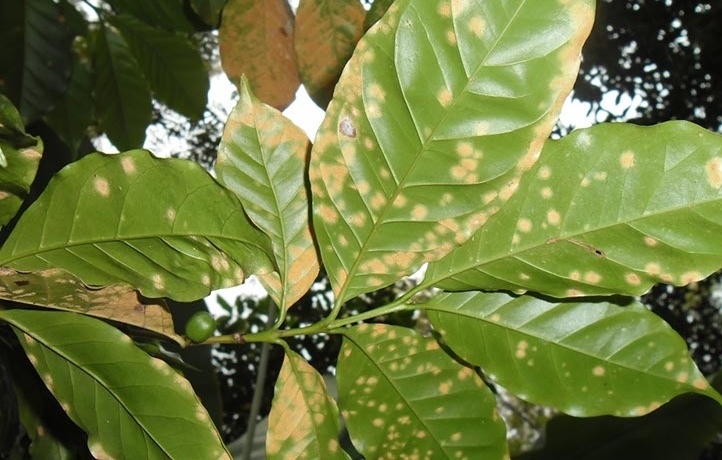
Investigadores de la UNMSM encuentran solución al problema de la Roya Amarilla del Café
En un informe emitido en marzo del 2013, la Organización Mundial de Café (OIC) señaló que el brote de Roya Amarilla del Café es una de las más graves plagas que afectan a esta planta en toda su historia de cultivo.
Es así que cinco países centroamericanos declararon en estado de emergencia su actividad de caficultura. Estos son Guatemala, México, Costa Rica, Honduras y Panamá.
Pero todo esto ya es parte del pasado. En la actualidad, un equipo científico de la Universidad Nacional Mayor de San Marcos, ha encontrado la posible cura a esta epidemia que afecta gravemente a las naciones, incluido el Perú.
Fuente: Texto completo
Diagnostic Validity of the Generalized Anxiety Disorder - 7 (GAD-7) among Pregnant Women
OBJECTIVE:
Generalized anxiety disorder (GAD) during pregnancy is associated with several adverse maternal and perinatal outcomes. A reliable and valid screening tool for GAD should lead to earlier detection and treatment. Among pregnant Peruvian women, a brief screening tool, the GAD-7, has not been validated. This study aims to evaluate the reliability and validity of the GAD-7.
METHODS:
Of 2,978 women who attended their first perinatal care visit and had the GAD-7 screening, 946 had a Composite International Diagnostic Interview (CIDI). The Cronbach's alpha was calculated to examine the reliability. We assessed the criterion validity by calculating operating characteristics. The construct validity was evaluated using factor analysis and association with health status on the CIDI. The cross-cultural validity was explored using the Rasch Rating Scale Model (RSM).
RESULTS:
The reliability of the GAD-7 was good (Cronbach's alpha = 0.89). A cutoff score of 7 or higher, maximizing the Youden Index, yielded a sensitivity of 73.3% and a specificity of 67.3%. One-factor structure of the GAD-7 was confirmed by exploratory and confirmatory factor analysis. Concurrent validity was supported by the evidence that higher GAD-7 scores were associated with poor self-rated physical and mental health. The Rasch RSM further confirmed the cross-cultural validity of the GAD-7.
CONCLUSION:
The results suggest that the Spanish-language version of the GAD-7 may be used as a screening tool for pregnant Peruvian women. The GAD-7 has good reliability, factorial validity, and concurrent validity. The optimal cutoff score obtained by maximizing the Youden Index should be considered cautiously; women who screened positive may require further investigation to confirm GAD diagnosis.
Authors: Qiu-Yue, Zhong; Gelaye, Bizu; Zaslavsky, Alan M.; Fann, Jesse R.; Rondon, Marta B.; Sánchez, Sixto E.; Williams, Michelle A.
Source: PLoS ONE
URL: http://hdl.handle.net/10757/552241
Authors: Qiu-Yue, Zhong; Gelaye, Bizu; Zaslavsky, Alan M.; Fann, Jesse R.; Rondon, Marta B.; Sánchez, Sixto E.; Williams, Michelle A.
Source: PLoS ONE
URL: http://hdl.handle.net/10757/552241
Neuroendocrine tumor in the uterine cervix: Case report
Neuroendocrine tumors of the cervix are extremely rare. Women diagnosed with small cell neuroendocrine carcinoma of the cervix have a higher frequency of metastases in the lymph nodes, lymphovascular invasion, recurrence and worse prognosis compared to those with other types of cervical neoplasia. We report the case of a 58-year-old female, with a history of six years of postmenopausal irregular vaginal bleeding, in addition to symptoms related to chronic anemia. Gynecological examination showed a tumor of 4 cm that occupied the upper third of the vagina and protruded through the cervix initially diagnosed as an abortifacient myoma, and sent to histopathology study. 90% of the tumor was small cell neuroendocrine carcinoma grade III, and the remaining 10% was squamous cell carcinoma. The patient underwent into a radical hysterectomy plus bilateral salpingo-oophorectomy, and bilateral pelvic and para-aortic lymphadenectomy. Histopathologic examination of the surgical specimen found endometrium and myometrium compromised by malignancy. Parametrium, annexes and lymph nodes were free of neoplasia. At microscopy, the result was a grade III neuroendocrine carcinoma (small cell carcinoma, infiltrating), with extensive lymphovascular emboli. The immune-histochemical study showed synaptophysin positive in areas with neuroendocrine differentiation.
Authors: Sandoval Díaz, Ither; Hernández Alarcón, Ronald; Palacios Cuervo, Fernando; Calderón Rivera, Andrea; Espinal Reyes, Fátima; Torres Arones, Esperanza; Delgado Elías, Andrea
Source: Revista chilena de obstetricia y ginecología (Rev. chil. obstet. ginecol.)
URL: http://hdl.handle.net/10757/550713
Authors: Sandoval Díaz, Ither; Hernández Alarcón, Ronald; Palacios Cuervo, Fernando; Calderón Rivera, Andrea; Espinal Reyes, Fátima; Torres Arones, Esperanza; Delgado Elías, Andrea
Source: Revista chilena de obstetricia y ginecología (Rev. chil. obstet. ginecol.)
URL: http://hdl.handle.net/10757/550713
Factors associated with negative appendectomy at a private hospital in Lima-Peru
Objective: Identify the frequency of negative appendectomy (NA) and associated
factors associated in a private hospital in Lima.
Methods: Retrospective study of all appendectomies performed between 2012
and 2013 at a private hospital of Lima-Peru. We reviewed the medical records of patients who underwent appendectomy and had a medical report of emergency.
We excluded the ones without pathology reports. Adjusted ORs were calculated
with a logistic regression model to identify factors associated with AN.
Results: Three hundred seventy-six appendectomies were performed for
suspected appendicitis 55.9% in women). The average patient age was 33.4 ± 17.6
years. We identified 28 AN cases of 363 patients (7.7%). We found that pain in
right flank (aOR: 5.4; 95%CI: 1.4-20.8), negative Mc Burney (aOR: 3.6; 95%CI: 1.3-
10.5), pain in hypogastrium (aOR: 3.1; 95%CI: 1.1-8.4) and no leucocitosis (aOR:
2.9; 95%CI: 1.2-6.7) were associated factors to AN. Gynecologic conditions (53.6%)
and complicated diverticular disease (14.3%) are the most common diagnosis in
AN cases.
Conclusion: The obtained results indicate that the presence of pain in the right
flank, negative Mc Burney, pain in hypogastrium and no leukocytosis are factors
that can be taken into account to prevent negative appendectomy.
Authors: Prialé Prialé, G.; Mayta Tristán, Percy
Source: Archivos de Medicina
URL: http://hdl.handle.net/10757/550729
Authors: Prialé Prialé, G.; Mayta Tristán, Percy
Source: Archivos de Medicina
URL: http://hdl.handle.net/10757/550729
Suscribirse a:
Entradas (Atom)